Terms and phrases for riding horses (with a fight scene in mind!)
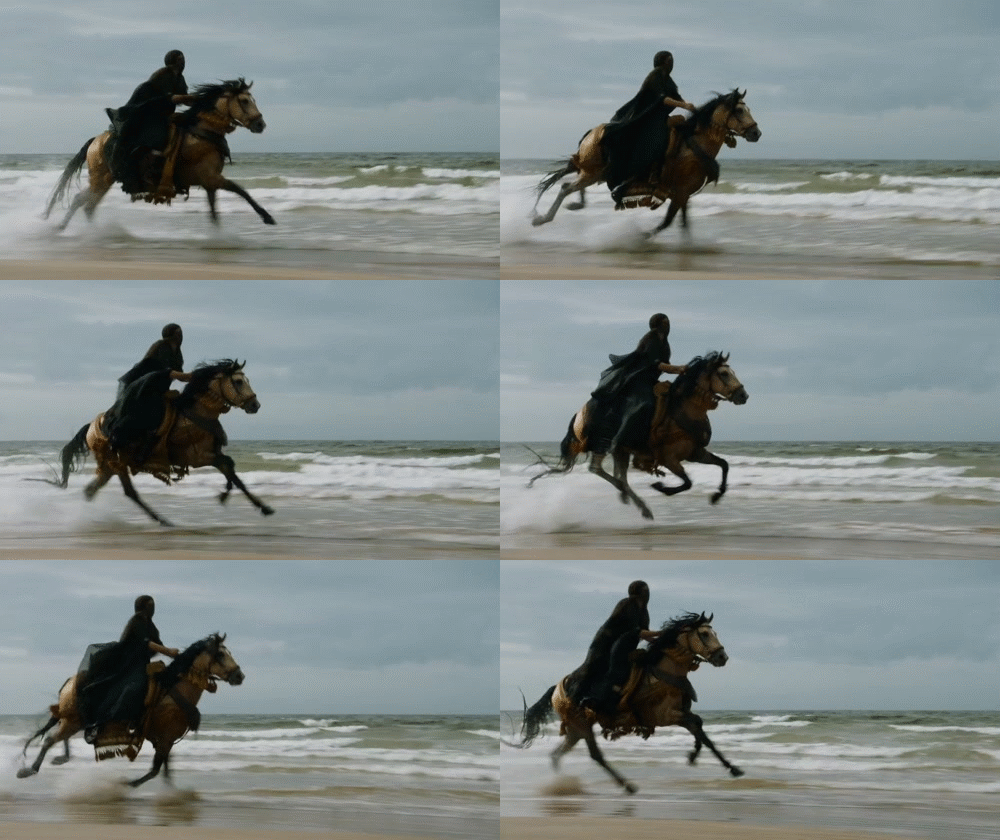
Walk, trot, canter, gallop – paces.
Halt = asking the horse to stop
Aids = instructions given to the horse, by the rider
Mount/Dismount = to get on/off the horse
Vault = to swing onto the horse, generally whilst it is moving
Contact = pressure/’feeling’ on the reins, between the riders hand and horses mouth. (used to direct the horse – see a little more about using the reins in this post – on writing horses in your WIP)
Near side = left side of horse
Off side = right side of horse
Hindquarters = horses rump/back end
Lame = A limping horse
Sound = a horse that isn’t lame
Rein back = asking the horse to step backwards
Half -Halt =when the rider asks the horse to pay attention a little
Transition = When the gait changes, (walk to halt, trot to canter, etc)
Rear = When a horse goes up on its hind legs
Buck = when a hors eputs its head between its front legs, and throws its hind legs up
Baulk = When a horse hesitates, or refuses to go forward
Spook = When a horse shies at something, and jumps
Barding = Armour used on horses. (It’s old timey knight stuff, but it might be what you want. More about that here)
Sword fighting terminology
(!!! I’m the first to admit I know next to nothing about swordfighting, only what I’ve researched for my own WIP. This terminology is from here, the brilliant Lisa Shea.)
Advance – a short forward movement.
Blade – the length of metal that is used for attacking or defending (i.e. the entire metal length beyond the guard).
Boar’s Tooth – a guard where the sword is before your front right leg.
Deflect – actively change the incoming sword’s speed or angle by hitting it with your own sword (or foot etc)
Diagonal – Moving forward diagonally forward – right. Edge – the sharp side of the blade. Japanese blades were typically single edged, while Medieval swords could have both sides sharpened. Empty Fade – Leaping backwards as if to fade but immediately leaping forwards again. Fade – Leaping backwards while leaving the feet in the same orientation.
False Edge – the back / trailing edge of the sword, usually the one you do NOT intend to cut with.
Front Guard – a guard where the sword is held vertically in front of your face. Full Iron Gate Guard – a guard where the sword is halfway between your right and left legs, angled right. Fuller – a groove running down the length of the blade. I have some books which claim this is a “blood groove” to help blood flow out of an enemy but other books which seem more reliable say it’s to help the sword come out of a body without being caught (it breaks the suction). Grip – the part of the hilt you grip with your hand for control.
Guard – a cross-piece on the hilt that keeps your hands safe from your opponent’s weapon sliding down the length of your blade. Also called a cross-guard. Guard – (meaning #2) – a position of safety, a pose where you can defend yourself from attack.
Guard of the Woman – a guard where the sword is over your right shoulder, behind your back.
Half Iron Gate Guard – a guard where the sword is held before your left leg.
Hilt – the generic name for the entire part of the sword near your hands, the part that is not the blade.
Long Point – a guard where the sword is straight out from your chest, with your arms extended.
Lunge – leaping forwards while leaving the feet in the same orientation.
Pass Back – Taking a step backwards by moving your front foot into the rear position.
Pass Forward – Taking a step forwards by moving your rear foot into the front position.
Pivot – Rotating 180 degrees while keeping the front foot stationary. Pommel – the knobby end of the hilt, used by the second hand for a ball-in-socket pivot point in many moves, or merely as a counterweight in one handed attacks.
Shed – to allow a sword to slide away off your sword without trying to impede / change it, so you are then free to attack or move.
Short Guard – a guard where the hilt is at your hip and the sword is pointing up and forward.
Slope – moving diagonally backwards back and left. Stance – the position your body is in to be ready for an attack or defense. Step Across– Rotating 180 degrees by crossing the front foot across the back foot and then turning in place.f Tail Guard – a guard where the hilt is at your hip and the sword is pointing behind you.
Tip – the pointy end of the blade. True Edge– the front / leading edge of the sword, usually the one you intend to cut with. Two Horn Guard – a guard where the sword pommel is at your chest with the sword pointing out.
Window Guard – a guard where the hilt is at your ear and the sword points forwards.




 Lyn'to's Sanctuary